
Teo Korean Medicine Clinic Bundang Cervical disc herniation (neck disc)

30-Second Answer

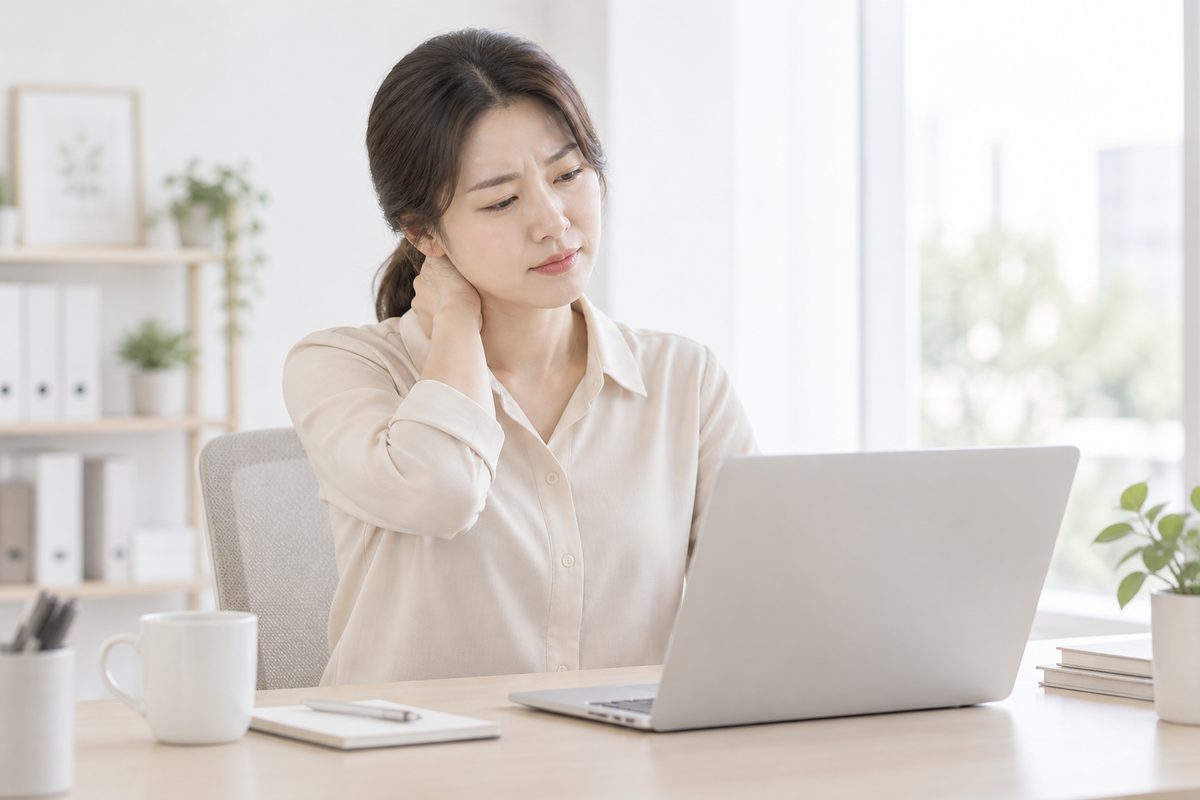
A person holding the back of the neck with a hand, feeling discomfort in the neck

When considering care for cervical disc symptoms, we check the chief complaint, when and why it began, and what makes it worse.
If there are nerve symptoms such as arm or leg numbness, we check where they appear as well.
We also look at forward head posture, straight neck, and upper cervical spine and TMJ problems.
We also check tenderness, range of motion, and tenderness at each spinal segment.

Please check first

If the hands become clumsy (fastening buttons, using chopsticks) and walking becomes unsteady, if both hands go numb together, or if urination is hard to control, it may be cervical myelopathy and testing is needed first.

If arm numbness comes with chest tightness, cold sweat, or pain spreading to the jaw or the left arm, it may be a heart problem and needs care immediately.

If you have fever, pain that worsens at night, or a history of cancer, other causes such as infection or tumor should be checked first.

Checklist

We check the following items at your visit.

Main concern

Onset and Cause

Aggravating situations

Medical and surgical history / Current medications

Tenderness

Range of motion

Pelvic tilt and leg-length difference

Cervical and thoracic displacement and asymmetry

Tenderness by spinal segment

Distribution of neurological symptoms

Treatment methods and order

We explain the treatments used in care and the order of Chuna manual therapy.

Treatment methods

Acupuncture · Electroacupuncture · Bee venom acupuncture · Corrective pharmacopuncture · cupping · moxibustion · Chuna manual therapy · Physical therapy · ICT

01

Pelvis / Legs

02

Lumbar region

03

Thoracic spine

04

Cervical region

Chuna manual therapy criteria

We proceed in the order of pelvis and legs, lumbar spine, thoracic spine, and cervical spine, adding or skipping parts as needed.

Technique: Pelvic Rotation Correction · Lumbar & cervical COX · Thoracic & cervical thrust · JS Distraction Technique · Joint mobilization / Distraction technique · Balance Gun

Treatment schedule

From the early stage of treatment onward

For about the first week, treatment is 3-5 times a week; in weeks 2-3, three times a week on alternate days; then twice a week.

When correction is the goal

Three times a week initially, then twice a week.

Related information

Neurological symptoms

We also assess neurological symptoms such as arm or leg numbness and their distribution.

Related items around the neck

We assess forward head posture and straight neck together with upper cervical spine and jaw joint problems.

Follow-up reassessment

We review discomfort and symptom changes after the previous treatment and plan the next treatment.

Common questions

We cover neck alignment problems, nerve symptoms, and the order of examinations separately.

Are a cervical disc and forward head the same?

For forward head and straight neck posture we look mainly at the posture in which the head comes forward and at problems with cervical alignment, while for a cervical disc we place importance on the distribution of nerve symptoms such as numbness and pulling that spread from the neck into the arm and hand. Not everyone with forward head posture has a cervical disc problem, and the two conditions can also appear together. We do not decide from the shape of the posture alone, but look together at the direction in which the symptoms spread and the situations that make them worse.

What is different when there is numbness in the arm?

Unlike stiffness limited to the neck and shoulders, numbness or weakness reaching the arm and hand calls for a closer check of nerve symptoms. It helps to note which fingers go numb, which direction of head movement makes it worse, and whether both hands are numb together. If chest tightness and cold sweats come with pain spreading to the jaw or left arm, care for a different cause is needed immediately.

Do I need an MRI or X-ray first?

Not all neck pain needs imaging first. If the pain began after a fall or a collision, if your hands have become clumsy, if your walking is unsteady, or if you have numbness in both hands or difficulty controlling urination, testing to check for cervical injury or myelopathy may take priority. If you have fever, night pain, or a history of cancer, other causes must also be checked first.

Why do you look at other areas and not only the neck?

In care for a cervical disc we review not only the cervical spine but also pelvic tilt and leg length difference, thoracic displacement and asymmetry, and problems of the upper cervical spine and the temporomandibular joint. This is to check the body's alignment and the distribution of nerve symptoms apart from the area that bothers you most right now. Please also tell us about past operations, medications you take, and how your symptoms changed after previous treatment.

Answers to search questions

We explain the causes and treatment of a cervical disc, and what to check when looking into a surgical option, in separate sections.

What should I check when looking for a medical institution that does cervical disc operations well?

Our clinic is a Korean medicine clinic, does not perform surgical procedures, and does not rank surgical providers against one another. If you need a surgical consultation, note how far your current symptoms run from the neck into the arm and hand, whether the strength or movement of your hand has changed, and whether your walking or bladder control has changed; prepare your previous imaging and treatment history and have this confirmed at a medical institution able to carry out the examinations. In particular, if your hands become clumsy, your walking becomes unsteady, or numbness in both hands or difficulty with bladder control newly appears, make examination the priority over ordinary neck pain care. Whether a surgical procedure is needed, and by what method, is for that institution to judge based on its examination and test results.

How do we look at the cause of a cervical disc?

We do not assume a single cause for neck and arm discomfort. We start by checking when and from what it began, how it changes when you move your head or hold a particular posture, and whether there was a fall or an impact. We take your medical and surgical history and current medications, then assess range of motion and tenderness, displacement and asymmetry of the cervical and thoracic spine, and tenderness by spinal segment. If numbness or pulling reaches the arm and hand, checking where it appears and whether one or both sides are affected helps distinguish a neck alignment problem from other causes.

How is the treatment method for a cervical disc decided?

In Korean medicine care we choose, from acupuncture, electroacupuncture, bee venom pharmacopuncture, corrective pharmacopuncture, cupping, moxibustion, Chuna manual therapy, physical therapy, and ICT, the methods that suit the condition we have confirmed. Chuna manual therapy follows the order of pelvis and legs, lumbar region, thoracic region, and cervical region as a baseline, adding the steps that are needed and leaving out the steps that do not fit. Besides the chief complaint at the first visit and the distribution of nerve symptoms, we also recheck any discomfort after the previous treatment and how the symptoms have changed, and reflect that in the next plan. If there are signs suggesting cervical myelopathy, or fever, night pain, or a history of cancer, the necessary tests and checking for other causes come before a Korean medicine treatment plan.

In what cases do we consult about a cervical disc operation?

Whether to have surgical treatment is not decided from the size of the pain alone; examination and any necessary tests have to be looked at together. Clumsy hands that make buttoning or using chopsticks difficult, an unsteady gait, numbness in both hands at once, and difficulty controlling urination are signs that the possibility of cervical myelopathy needs to be checked. If you have such changes, do not simply watch the course at a Korean medicine clinic, which does not perform operations; first get an evaluation at a medical institution where testing is possible. In other cases as well, you should consult the medical team in charge of the operation based on how the symptoms are progressing, the distribution of the nerve symptoms, the imaging findings, and your treatment history so far.

What determines the cost of procedures and surgical treatment for a cervical disc?

Because we do not perform surgical procedures, we do not provide prices for operations or for procedures at outside medical institutions. Clinic fees also vary with the type of treatment chosen, the area treated, the number of visits, and the materials used, so a single price is difficult to state before your condition is reviewed. National health insurance, auto insurance, and indemnity insurance are not applied under the same standards, and the scope can differ depending on your policy and the treatment items. Please confirm the actual scope of coverage and your out-of-pocket share with our clinic and with the relevant insurer before treatment.

Five criteria for understanding cervical disc herniation

We cover everything in order, from the structure of the neck to recording symptoms, adjusting daily life, and the criteria for reassessment.

The relation between the disc and nerve irritation

The intervertebral discs between the cervical vertebrae are structures that spread out the impact when the neck moves. If moisture and elasticity decrease with aging, or repeated loading creates cracks in the annulus fibrosus, the nucleus pulposus inside can be pushed out. Depending on the position and direction in which the nerve root is then irritated, the discomfort may not stay in the neck but continue into the shoulder and shoulder blade, the arm, and the hand. Whether the pattern spreading into the arm changes along with the movements of the neck is also a clue for examining nerve irritation.

Even with the same neck pain, what you feel differs depending on tension in the muscles and ligaments, joint movement, and nerve irritation. Local pulling when you move the neck and numbness running into a particular arm or finger call for different things to be checked, so we do not decide it is a cervical disc from the location of the pain alone.

How much the disc changes seen on imaging relate to your current symptoms also has to be looked at separately. In examination we compare the symptoms you feel now, changes in strength and sensation, and your response to movement, rather than the name on the imaging report.

Repeated load rather than a single moment's posture

Looking down at a low screen, pushing the head forward toward a monitor, and sitting with the chin propped on the hand all change the way the muscles around the neck support the head. What has to be looked at is not one posture held briefly, but how long and how often such a state is repeated.

Leaning the upper body to one side while driving for long periods, or keeping the neck sharply bent on a high pillow while sleeping, are also lifestyle conditions we check during the interview. However, we do not point to one particular posture as the main cause; aging, outside impact, occupational load, and what triggered the onset of symptoms need to be looked at together.

Keep the screen close to eye level and sit with your back against the chair, and move your smartphone to a position where you do not have to bend your head far down. Even a well-set posture can build fatigue if held without moving, so change position often and spread short breaks through the day.

Recording symptoms makes them easier to tell apart

Before your visit it helps to write down the date the symptoms started and what brought them on, the time of day they worsen, and the postures or movements that create the discomfort. Note separately whether it is a heavy neck pain, whether it spreads past the shoulder and shoulder blade into the arm, and which fingers feel numb.

Whether you have become clumsier than usual at buttoning a shirt or using chopsticks, whether you drop things often, and whether both hands are numb together are also important changes. Such notes help separate local muscle pain from nerve symptoms and help compare how things have changed since your previous visit. Writing down how long the symptoms last and how often they occur makes the course of the symptoms easier to follow.

We do not leave out changes in strength and sensation just because the symptoms have eased for a while. If the area of numbness widens, strength gradually gives way, or your gait changes, do not put off the timing of care; check whether tests are needed.

When conservative care is considered first

Even when a surgical consultation for cervical disc herniation is being considered, we do not decide the direction from the level of pain alone. We also need to look at whether there is progressive muscle weakness or signs suggesting myelopathy, whether the imaging findings and the distribution of symptoms match, and how you responded to previous care.

If there is no problem with fine hand movements, walking, or bladder control, and there are no other signs calling for immediate testing, conservative care may be considered first depending on the examination findings. In Korean medicine care we choose among acupuncture, electroacupuncture, pharmacopuncture, cupping, moxibustion, and Chuna manual therapy according to your current condition and your response to treatment. Because the extent and sensitivity of symptoms differ, not every method is applied at once.

Choosing conservative care does not mean waiting indefinitely with no set period. We reassess the extent of numbness, muscle strength, and difficulty with daily movements, and if symptoms newly appear or progress, we connect you with a medical institution that can carry out testing. Our clinic is a Korean medicine clinic and does not perform operations.

Daily habits to adjust alongside your care

While reading or working, rather than rolling the neck in a large circle, change your posture within a range that does not hurt and loosen the tension in your shoulders. If numbness spreads farther into the arm and hand during stretching, or strength gives way, stop that movement. Also avoid the habit of forcing the neck or turning it repeatedly to make it crack.

When driving, adjust the seat and headrest so that your back rests against the seatback and your head does not tilt to one side. If you have to drive for a long time, break up the trip with rests so that you do not hold the same posture continuously, and it is good to watch how your symptoms change after traveling.

When sleeping, use a pillow at a height that does not bend or extend the neck excessively, and reduce sleeping face-down with the neck turned to one side for long periods. Adjusting daily habits does not take the place of care; if arm numbness and loss of strength continue, do not wait while only changing posture, but have the cause checked.

FAQ

What do you check in neck disc care?

We check the chief complaint, when and why it began, what makes it worse, past medical history, history of operations, current medications, tenderness, range of motion, pelvic tilt and leg length difference, cervical and thoracic displacement and asymmetry, tenderness at each spinal segment, and the distribution of nerve symptoms.

In what order is Chuna manual therapy performed?

We proceed in the order of pelvis and legs, lumbar spine, thoracic spine, and cervical spine, adding or skipping parts as needed.

What is the treatment schedule?

In the early phase, about 3-5 sessions a week for 1 week; in weeks 2-3, 3 sessions a week on alternate days; and after that, 2 sessions a week. If the aim is correction, 3 sessions a week at first and then 2 sessions a week.

Are other items looked at together in cervical disc care?

We look at nerve symptoms such as arm and leg numbness together with forward head posture, straight neck, and upper cervical and TMJ problems.

What do you check at return visits?

We review discomfort and symptom changes after the previous treatment and plan the next treatment.

What is the difference between a cervical disc and forward head posture?

For forward head posture and straight neck, we focus on neck alignment and posture, while for a cervical disc we also check the distribution of nerve symptoms such as numbness or pulling that spreads to the arm. Because the two can overlap, it is advisable not to decide on a diagnosis yourself from arm numbness alone.

Do you perform cervical disc operations?

We are a Korean medicine clinic and do not perform surgical procedures. If your hands become clumsy, your walking becomes unsteady, or numbness in both hands or difficulty with bladder control appears, we first refer you to care at a medical institution that can perform tests before any discussion of an operation.

How do you check the cause of a neck disc problem?

Rather than assuming a single cause in advance, we ask when and how the symptoms started, which postures and movements make them worse, and your past history, surgical history, and medications. We then check range of motion and tenderness, cervical and thoracic alignment, and the distribution of nerve symptoms in the arms and hands.

What should I adjust in daily life when I have neck disc symptoms?

Keep the screen close to eye level and reduce the time spent with your head bowed or pushed forward. Do not hold one posture for long; change position often, and stop any stretch that worsens arm numbness or any movement that forcefully bends the neck. Also check the car seat and headrest, and any pillow height that bends the neck excessively.

Does every neck disc case need a consultation about an operation?

Whether an operation is needed is not decided by the intensity of pain alone; neurological examination, how the symptoms progress, and imaging findings must be looked at together. If fine hand movements become difficult or there are changes in walking or bladder control, an evaluation at a medical institution that can perform tests comes first. When there are no such signs, conservative care may be considered first based on the examination findings, and if weakness or numbness progresses during the course, you should be evaluated again.

Related pages

Hours

Open 365 Days a Year · Weekday evening hours until 9 PM · Sundays & Holidays until 5 PM

Location & Treatment Info

Branch Name

Teo Korean Medicine Clinic Bundang

Address

67 Dolma-ro, Bundang-gu, Seongnam, Gyeonggi-do (Geumsan JamWorld, 2F)

Nearest station

Suin-Bundang Line and Shinbundang Line Migeum Station, Exits 1 and 2 · Exit 1 — 2F of Geumsan Gem World (JS King Hotel) on the right · Exit 2 — 2F of Geumsan Gem World (JS King Hotel) on the left

Bus

Get off at Migeum Station 2001 Outlet bus stop; walk 288 m

Teo Korean Medicine Clinic Bundang Cervical Disc Herniation Service Area

Teo Korean Medicine Clinic Bundang: Cervical Disc Herniation care, patients come to us from Geumgok-dong·Jeongja-dong·Gumi-dong·Sunae-dong·Seohyeon-dong·Imae-dong·Yatap-dong.

The subway stations used are Migeum Station·Jeongja Station·Ori Station·Sunae Station·Seohyeon Station·Imae Station·Yatap Station.